 Real-Time Media Conductor
Learn · Room model
Participants
Map application users and services to room participants with scoped credentials.
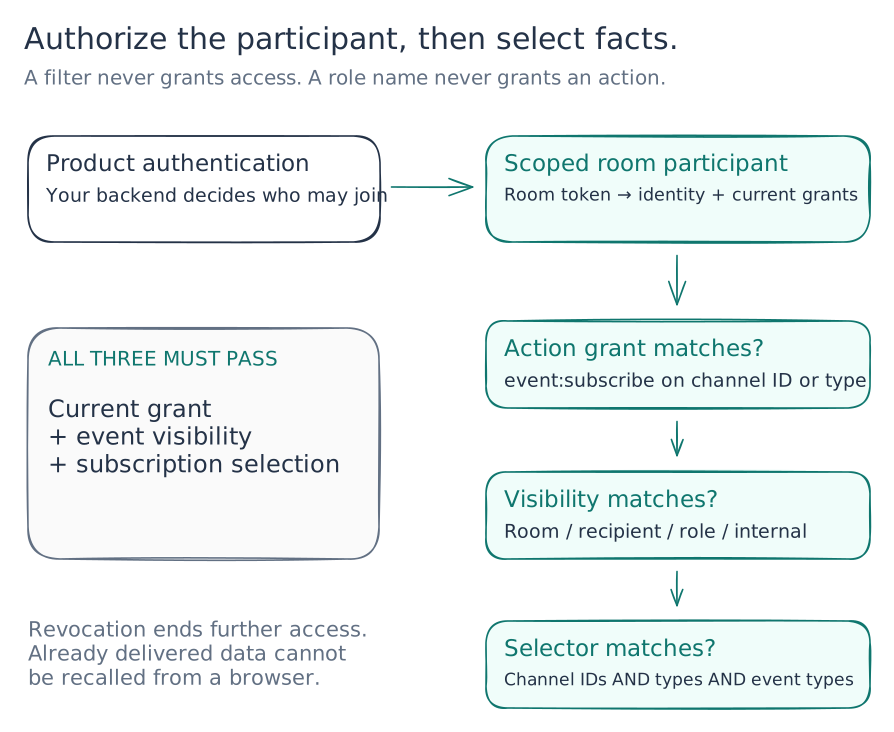
A participant is an identity inside a room with a role, grants, and a bearer credential. It can represent a browser user or an embedded agent. Your product authenticates the person; RMC authorizes the participant's operations.
Bind product identity to room authority
Your backend creates or locates the room, determines the user's access, and issues a participant token. Keep that mapping in your application. A user ID from your identity system is not automatically an RMC participant ID, and a supplied participant ID is not proof of authentication.
// Trusted backend: owner is a provisioned room's owner RoomClient.
const invited = await owner.invite("customer", [
  {action: "event:publish", resource: "chat"},
  {action: "event:subscribe", resource: "chat"},
]);
Return owner.roomId, invited.participant.id, and invited.token through your authenticated application endpoint. Keep the owner credential on the backend.
This customer can publish and read eligible chat events. The role string does not supply those permissions; the grants do. Invitation is privileged: RMC accepts the grants an authorized inviter supplies, so your backend must decide their scope.
Keep three questions separate
| Question | Mechanism | Example |
|---|---|---|
| Who is acting? | Participant credential | Customer participant in this room |
| May they perform the operation? | Action/resource grant | event:publish on chat |
| Is this record intended for them? | Visibility, followed by selection | A specialist-only note remains hidden from the customer |
An event records the authenticated actor. A subscription uses that participant's current authority as it reads. Multiple subscriptions on one room handle therefore share an identity even though they keep separate progress.
End access deliberately
Revoking a participant blocks future authorized use and ends existing stream access. It cannot recall data already received or undo an application callback's side effects. Provider cleanup follows the separate live media boundary.
Read authorization and revocation for the grant table, visibility rules, and revoke request. The enforcement lives in session.go and auth.go; session tests document the boundary.